
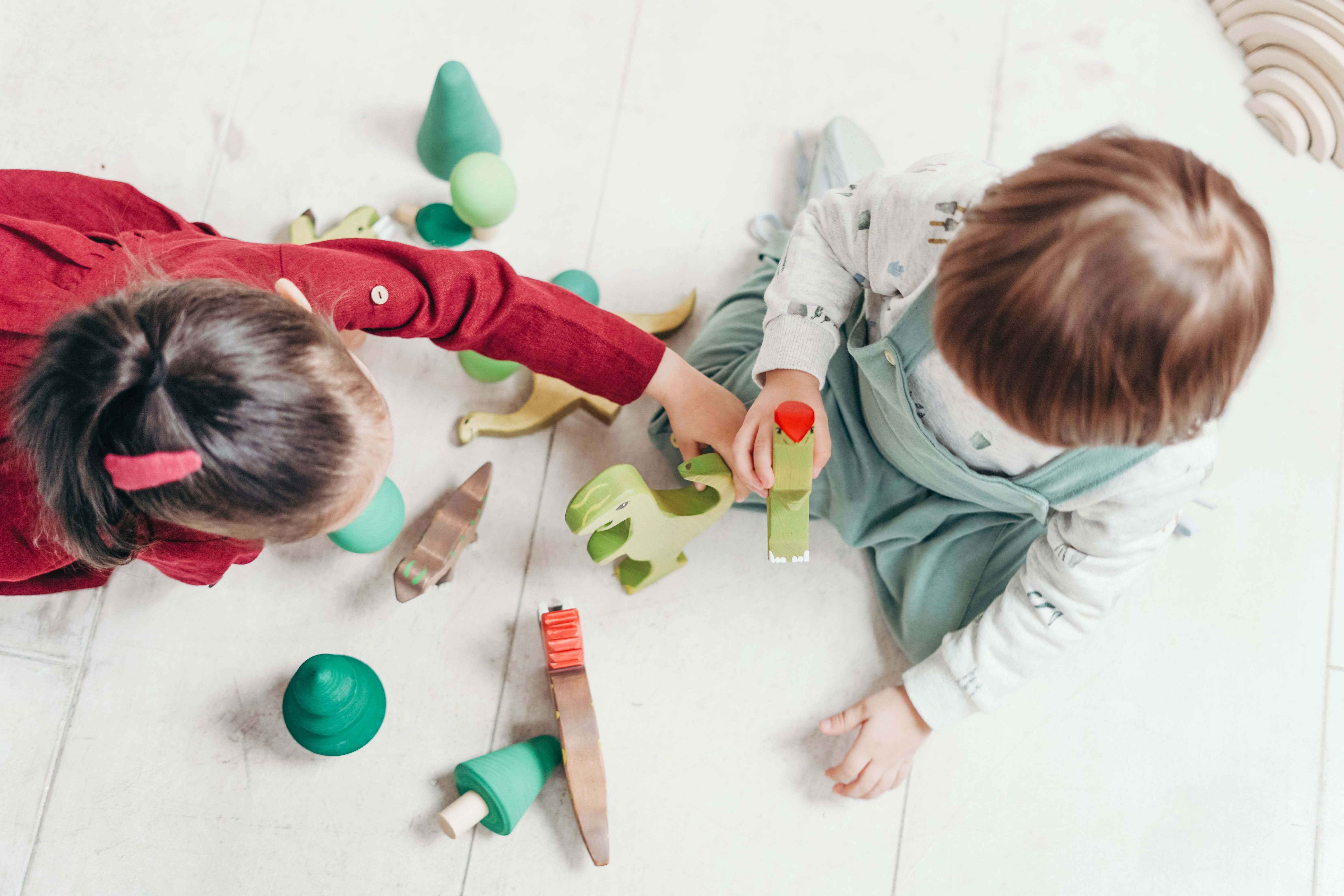
The class is playing at centers, and the same two children are arguing over the red racecar. Again. You’ve tried removing the toy, adding two more race cars, and getting rid of the cars center altogether, but nothing is working. It seems that this conflict is unavoidable.
And you’re right: it is. But that’s because conflict is both developmentally appropriate and necessary for children to learn essential problem-solving skills. In other words, conflict isn’t just unavoidable, it shouldn’t be avoided. In this blog, we’ll share some practical tips for turning classroom conflict into an opportunity for children to practice critical thinking and cooperation.
Why Conflict is a Powerful Learning Opportunity
Exposing children to intentional conflict resolution at a young age prepares them for the conflicts they will inevitably experience in their personal and professional relationships in the future. When children learn to identify and resolve conflict, their internal locus of control is strengthened; they begin to understand that they have control over their responses to the external factors, like experiences or feelings, that are outside of their control. Owning and resolving conflict teaches children that they have the power to solve problems and make a positive impact on their own lives and in their community.
Emotional regulation, empathy, and communication are all strengthened when children participate in the conflict resolution process. We also see more flexibility in problem-solving and creative thinking when children collaborate to resolve conflict. These opportunities for growth are crucial steps toward reaching other key developmental milestones in childhood and beyond.
The Teacher’s Role: Guiding, Not Controlling
In the midst of a busy school day, it is difficult to pause and create space for children to work through the conflict resolution process. It feels easier and faster to just solve the problem– to remove the toy or set a timer for sharing rather than involving children in a longer process of questioning, sharing, and brainstorming. But involving children in the conflict-resolution process is essential for developing a classroom culture of positive and productive problem-solving. Here are a few guidelines:
Normalize Conflict
The first step to creating a positive environment for conflict resolution is normalizing conflict. The teacher’s tone of voice and body language should be warm and gentle, helping a potentially frustrated or upset child co-regulate. You might say something like this: “It’s okay! Conflict and disagreements happen all the time. Just the other day, I had a disagreement with my sister. We had to figure out who was going to bake the cake for our mom’s birthday. We can work together to solve this problem too, just like my sister and I did! Let’s get our thinking caps on!”
Lead with Questions
To ensure that children remain at the forefront of the conflict-resolution process, allow questions to guide the process. Rather than sharing your own observations and solutions, prompt children to express their feelings and ideas. We’ll outline a specific conflict-resolution process in the next section.
Model Respectful Dialogue
As children respond to prompts and move through the process of resolving the conflict, model the language you want to hear from them. If a child isn’t communicating clearly or respectfully, provide a sentence stem for them to repeat. It can be difficult for a child who may still be emotionally escalated from the conflict to communicate clearly.
When we make time to guide this process, rather than control it, we begin to see these moments as the real “lessons,” the chance for children to get real-life practice applying the social and emotional skills we’ve been teaching them all year long.
Follow a Predictable Process
The goal in creating a predictable and consistent process for resolving conflict is for children to eventually adopt that process and utilize it to problem-solve independently in a variety of contexts. The framework sticks with them, and they can use it to think through any problem. Here’s an example of a conflict resolution process for your class to follow:
Step 1: How am I feeling right now? Do I have a problem?
Step 2: What is the problem? Name it.
Step 3: How could we solve the problem? Let’s brainstorm some ideas.
Step 4: Which solution is best for us? Let’s agree on one solution to try.
This process is guided by questioning to help children self-reflect and think creatively about solutions. While the ultimate goal of the process is independence and self-reflection, when teachers first introduce the idea, they should scaffold by modeling the process step by step. This might look like asking the prompting questions and also modeling how to respond. Creating a visual aid, like an anchor chart, with these guiding questions (and visual symbols to represent each step) will help keep the children and teacher on track when moving through the problem-solving process.
Playing the Long Game
Keep in mind that when it comes to classroom conflict-resolution, we are playing the long game. In a busy classroom, it might feel easier for a teacher to quickly solve a problem herself, but that method doesn’t build the essential skills that will allow children to someday solve these problems on their own. Whether it’s a flat tire when they’re learning to drive or a disagreement with a future coworker, the problem-solving process that children learn in your classroom today will equip them with the skills and confidence they’ll need to tackle future conflicts too.
A Guide for Teachers
At FirstDay Learning, we are committed to helping educators learn new strategies for making the most of every teachable moment, even classroom conflicts. Our evidence-based training, coaching, and resources help teachers integrate strategies designed to support the social-emotional development of each child. Explore our online training courses or call (434) 989-2434 to learn how we can support your team.